Streaming habits in the UK have changed dramatically over the past decade. Many households that once relied entirely on traditional television are now exploring internet-based alternatives. With fibre broadband becoming more common and smart devices in almost every home, viewers are asking an important question: IPTV vs Cable TV in the UK – which one actually makes more sense in 2026?
Cable TV has been the backbone of home entertainment for years. But IPTV is quickly becoming a serious contender. If you’re considering switching services or setting up TV in a new home, this guide will walk you through the differences clearly and honestly.
Table of Contents
| Sr# | Headings |
|---|---|
| 1 | What is Cable TV? |
| 2 | How Cable TV Works |
| 3 | Pros and Limitations of Cable |
| 4 | What is IPTV? |
| 5 | How IPTV Technology Works |
| 6 | Content Variety – IPTV Channels UK vs Cable Packages |
| 7 | Flexibility and Device Support |
| 8 | Streaming Quality and Reliability |
| 9 | Installation and Setup Differences |
| 10 | Cost Structure Differences |
| 11 | User Experience and Interface |
| 12 | Which Option Is Better for UK Viewers in 2026? |
| 13 | Final Verdict |
| 14 | FAQs |
What is Cable TV?
Cable TV is a traditional broadcasting system that delivers television channels through underground or aerial coaxial cables. In the UK, cable providers operate using fixed infrastructure that connects your home to their network.
How Cable TV Works
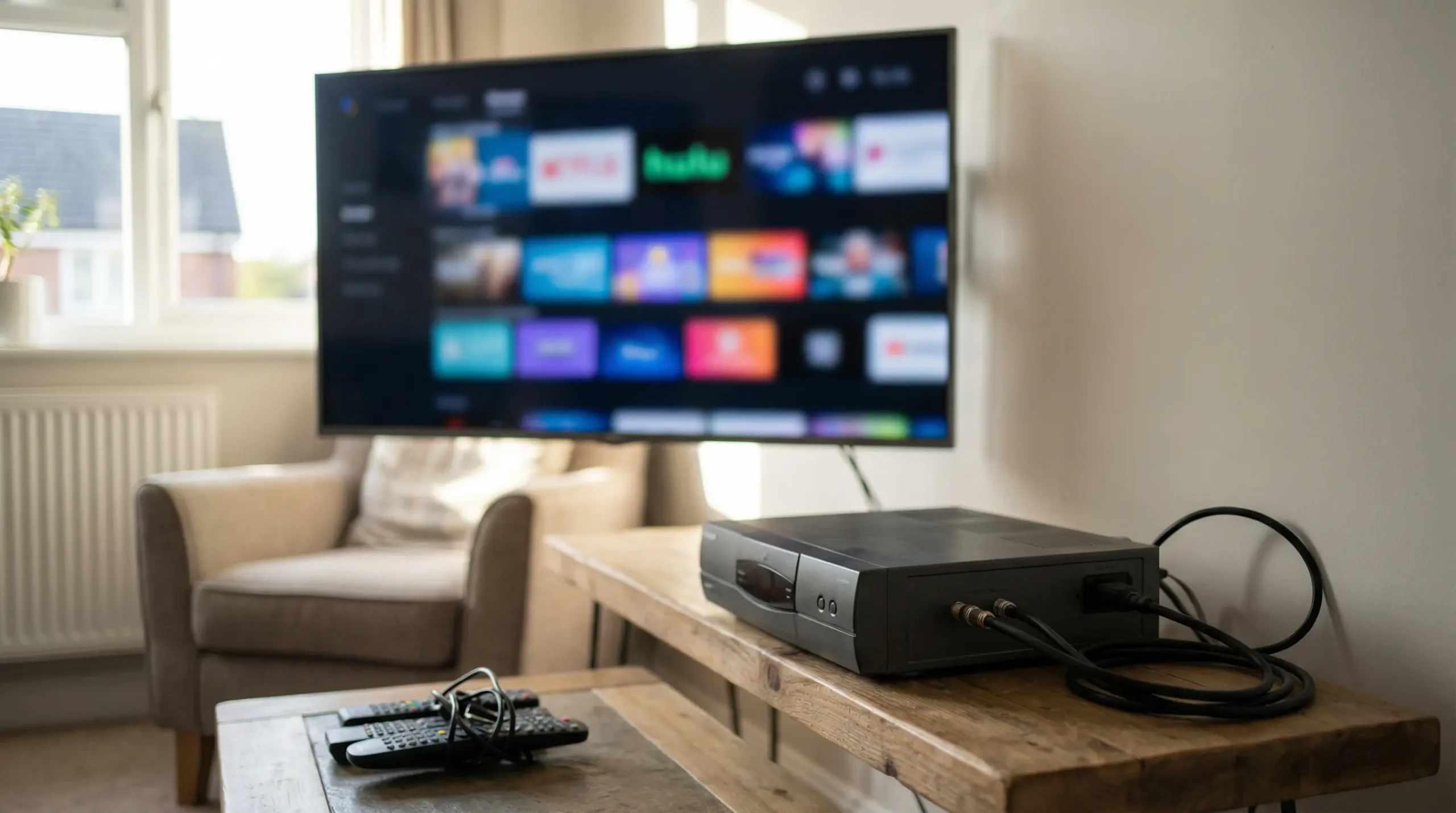
Cable TV providers send signals from broadcasting centres to local distribution hubs. From there, signals travel through physical cables into your home. You typically need:
- A wall cable connection
- A provider-supplied TV box
- A remote control
It’s straightforward and has worked reliably for years.
Pros and Limitations of Cable
Strengths:
- Stable connection not dependent on internet speed
- Simple setup once installed
- Familiar channel structure
Limitations:
- Fixed location viewing
- Limited portability
- Fewer customisation options
- On-demand libraries may be restricted
Cable TV is like a train running on fixed tracks. It’s reliable, but it only goes where the tracks are laid.
What is IPTV?
IPTV stands for Internet Protocol Television. Instead of using traditional broadcast signals, IPTV streams television content over your internet connection.
How IPTV Technology Works
With IPTV, content is delivered through broadband rather than physical cable lines dedicated to TV. This means you can watch content via:
- Smart TVs
- Streaming devices like Firestick
- Tablets
- Smartphones
- Laptops
Unlike cable, IPTV feels more like driving your own car instead of riding that train. You choose the route, device, and even the viewing time.
Content Variety – IPTV Channels UK vs Cable Packages
One of the biggest differences in the debate around IPTV vs Cable TV in the UK is channel flexibility.
Cable Packages
Cable providers typically group channels into structured bundles. While these packages cover mainstream UK channels, sports, entertainment, and documentaries, adding niche content can be limited.
IPTV Channels UK
IPTV services often provide broader international access alongside UK-focused content. Many IPTV Providers in UK offer:
- Live UK channels
- Sports coverage
- International programming
- On-demand films and series
The phrase IPTV Channels UK has become popular because viewers want flexibility beyond traditional broadcasting structures.
However, content availability depends on the provider and service structure. It’s important to choose reputable providers that operate responsibly within UK regulations.
Flexibility and Device Support
Modern households rarely watch TV in just one room.
Cable TV Devices
Cable TV usually requires:
- A dedicated cable box
- Physical TV connection
Watching on multiple TVs often means additional hardware.
IPTV Device Compatibility
IPTV works across:
- Smart TVs
- Firestick
- Android TV boxes
- iOS and Android smartphones
- Tablets
This flexibility is one reason many people search for the Best IPTV Service for UK households. The ability to move from living room to bedroom to mobile device seamlessly fits modern lifestyles.
Streaming Quality and Reliability
Quality matters. No one enjoys buffering during a live football match.
Cable TV Stability
Cable TV is not dependent on your home internet speed. As long as the cable infrastructure is stable, you’ll usually receive consistent picture quality.
IPTV Streaming Quality
IPTV quality depends on:
- Your broadband speed
- Router performance
- Network traffic
Most modern IPTV services support:
- HD streaming
- Full HD
- 4K (where available)
With the UK’s growing fibre coverage, streaming quality continues to improve. However, if your internet connection is weak, IPTV performance can suffer.
Installation and Setup Differences
Cable Installation
Cable installation may require:
- Engineer visits
- Wall cable access
- Scheduled appointments
This can take time, especially in new properties.
IPTV Setup
IPTV typically involves:
- Installing an app
- Logging into a service
- Connecting to WiFi
The setup is often quicker and more flexible, especially for renters or students.
Cost Structure Differences
When discussing IPTV vs Cable TV in the UK, cost is often part of the conversation. Without diving into exact numbers, here’s how they differ structurally.
Cable TV Costs
Cable often involves:
- Long-term contracts
- Equipment rental
- Installation charges
IPTV Service Costs
IPTV services typically operate on:
- Subscription-based models
- Shorter commitment periods
- Lower equipment requirements
That said, pricing varies depending on features, support, and content access. The key is not just cost, but value for your specific viewing habits.
User Experience and Interface
Cable Interface
Cable boxes offer structured channel guides. The interface is familiar but sometimes slower to update with modern features.
IPTV Interface
Many modern IPTV platforms offer:
- App-style layouts
- Search functions
- Catch-up TV
- Video-on-demand libraries
Some of the Best IPTV Providers in UK invest heavily in user-friendly dashboards. Services such as Golden TV, for example, represent the type of modern IPTV platform designed to provide smoother navigation without unnecessary complexity.
Ease of use is becoming a deciding factor in 2026.
Which Option Is Better for UK Viewers in 2026?
There isn’t a universal answer. It depends on what matters most to you.
Cable may suit you if:
- You prefer traditional TV structure
- Your internet speed is limited
- You value fixed stability
IPTV may suit you if:
- You want multi-device access
- You enjoy on-demand content
- You prefer flexible viewing
As broadband infrastructure continues improving across the UK, more households are exploring IPTV Providers in UK as alternatives to conventional cable.
The rise in searches for Best IPTV Providers in UK shows that viewers are actively comparing features, reliability, and flexibility before deciding.
Final Verdict
So, when it comes to IPTV vs Cable TV in the UK, which wins in 2026?
Cable remains stable and dependable. It has history on its side.
IPTV, however, aligns more closely with modern digital lifestyles. It offers portability, flexibility, and broader device support. As internet speeds improve nationwide, IPTV continues gaining traction among UK viewers who want control over how and where they watch.
Ultimately, the better option depends on your home setup, viewing habits, and expectations. There is no one-size-fits-all answer — only the solution that fits your lifestyle.
If you would like more information about reliable IPTV options in the UK, feel free to contact us via WhatsApp for further details.

FAQs
1. Is IPTV legal in the UK?
IPTV technology itself is legal in the UK. Legality depends on the service provider and whether they have proper rights to distribute content.
2. Do I need fast internet for IPTV?
Yes, a stable broadband connection improves streaming quality. Fibre broadband is ideal for HD and 4K content.
3. Can I use IPTV on multiple devices?
Many IPTV services support multiple devices, including smart TVs, Firestick, smartphones, and tablets.
4. Is cable TV more reliable than IPTV?
Cable can be more stable if your internet speed is weak. However, with strong broadband, IPTV can perform equally well.
5. Are IPTV Providers in UK replacing cable TV?
IPTV is growing in popularity, but cable TV still has a presence. Many households are exploring IPTV as an alternative rather than a complete replacement.